
East of Congress Avenue toward I-35 is undergoing a once-in-a-generation transformation. Six major public and private projects are either under construction or in planning, and together they're reshaping what East Downtown looks like, how it connects, and who it serves.
If this sounds familiar, it should. We've already seen this playbook on the west side of downtown.
The West Side Precedent
Over the past decade, a wave of public investment reshaped everything west of Congress. The Central Library opened in 2017 and became an anchor for the Shoal Creek corridor. The Shoal Creek Trail was extended and improved, linking downtown to the lake with a continuous greenbelt. Seaholm Plaza activated the old power plant district with retail, restaurants, and public gathering space. The 2nd Street District grew into one of Austin's most walkable mixed-use neighborhoods.
The common thread: public infrastructure and placemaking investments came first, and private development followed. Property values in West Downtown and the 2nd Street corridor reflect that. Buildings like The Independent, Seaholm Residences, and 360 Condominiums sit in a neighborhood that barely resembles what it was 15 years ago.
Now the same pattern is playing out on the east side, with six projects converging at once.
1. Waterloo Greenway (Waller Creek Revitalization)
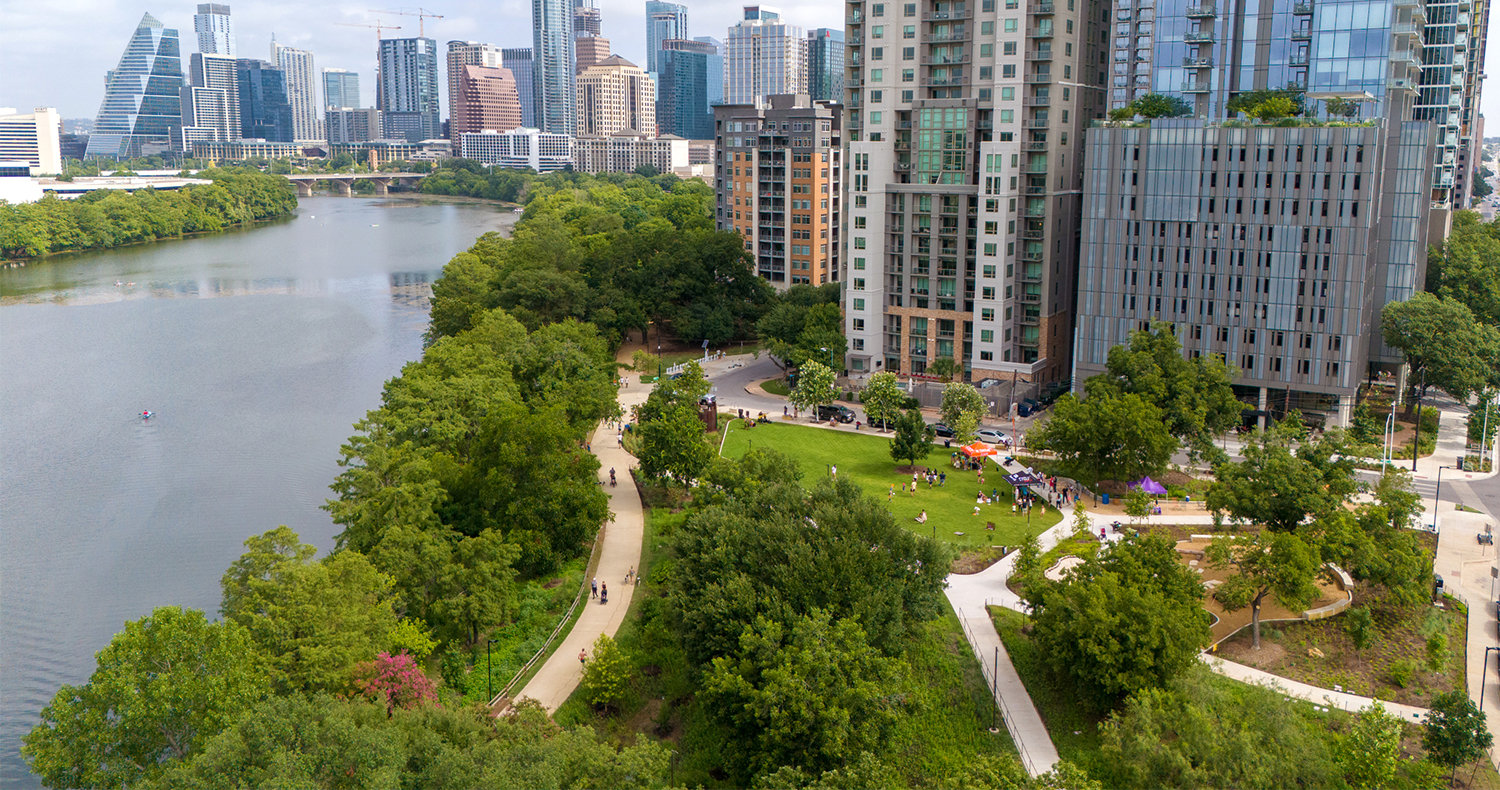
A multi-phase, 35-acre urban park system restoring Waller Creek from 15th Street to Lady Bird Lake. Sometimes called "The Green Spine" or "The Green Connector," the project creates a continuous trail system linking the University of Texas campus to the river, connecting nearly every major project on this list along the way. It's transforming a neglected waterway into an activated greenbelt with parks, trails, performance venues, and community spaces.
Where things stand:
- Phase I (Completed 2021): Waterloo Park, Moody Amphitheater, and Symphony Square are open and active.
- Phase II (Underway, est. 2026-2028): The Confluence section opens June 2026. Palm Park redevelopment will add shaded trails, native landscaping, and play areas.
- Phase III (Planning): Completing the connection between the north and south segments, improving accessibility from East Austin and downtown.
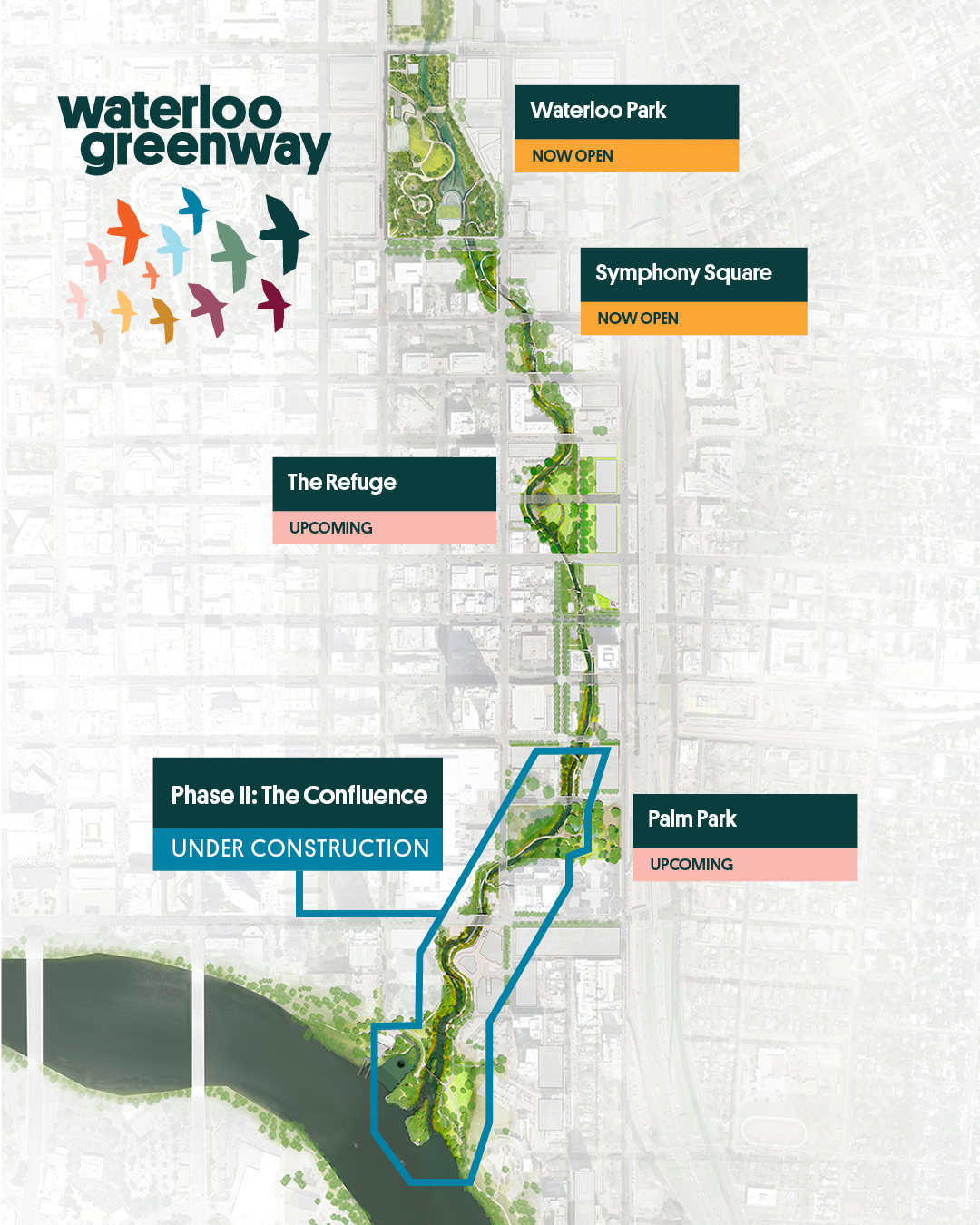
Why it matters: The comparison to Shoal Creek Trail is fair, but Waterloo Greenway is operating at a different scale. At 35 acres, it's significantly larger, more programmed, and more actively managed, with dedicated event spaces, performance venues, and maintained landscaping throughout. It adds significant park access in a dense urban core, boosts walkability, and directly improves quality of life for nearby residents. Condos along Waller Creek that once backed up to a neglected drainage channel will instead front a connected park system. Just as importantly, the Greenway is being designed as the connective tissue for everything else on this list — its trail network ties directly into the Convention Center redevelopment, the I-35 cap, the 6th Street corridor, Rainey, and the future light rail stop at the Convention Center, so each of these projects feeds into the others rather than standing alone.
Learn more about Waterloo Greenway
2. Austin Convention Center Redevelopment
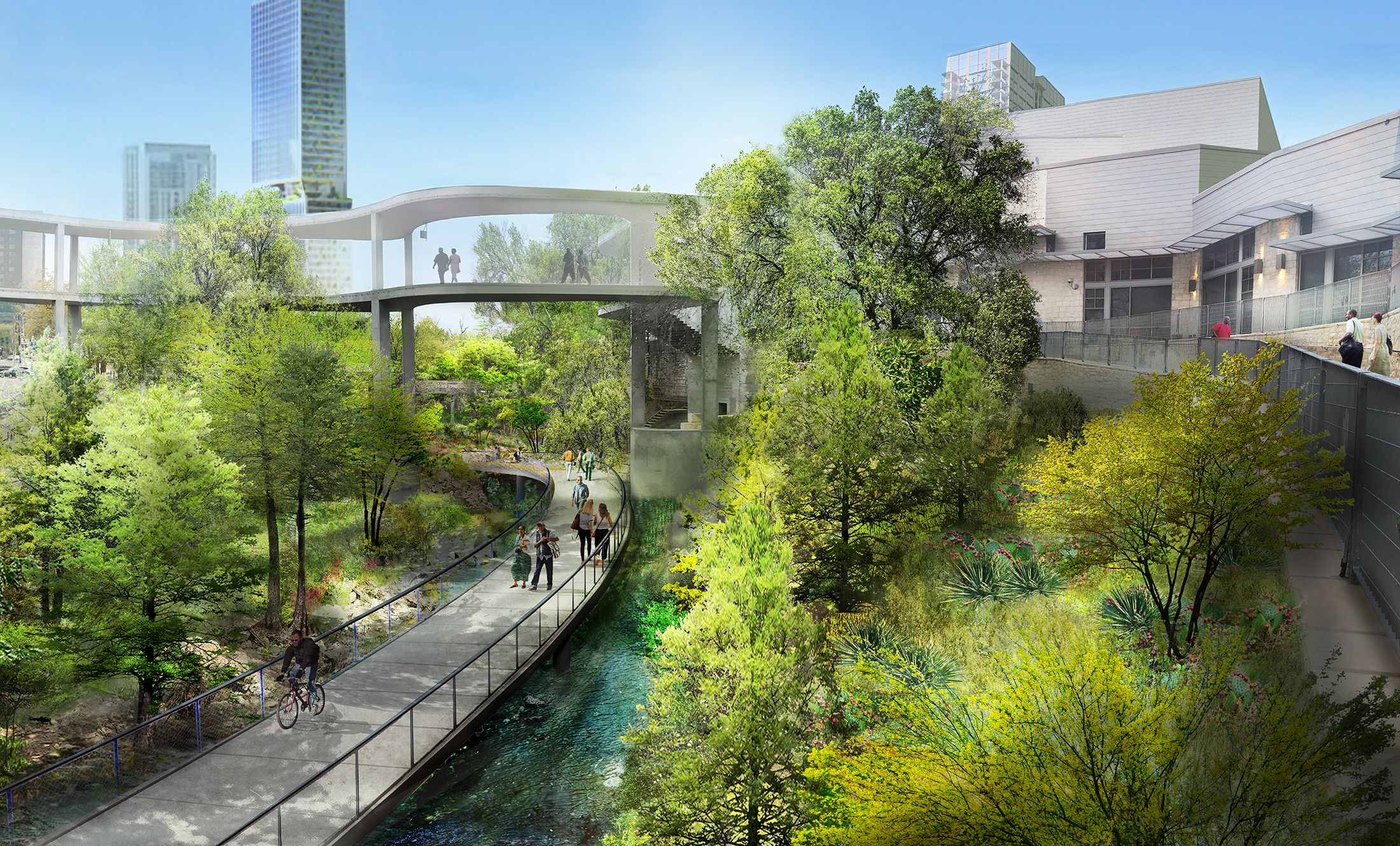
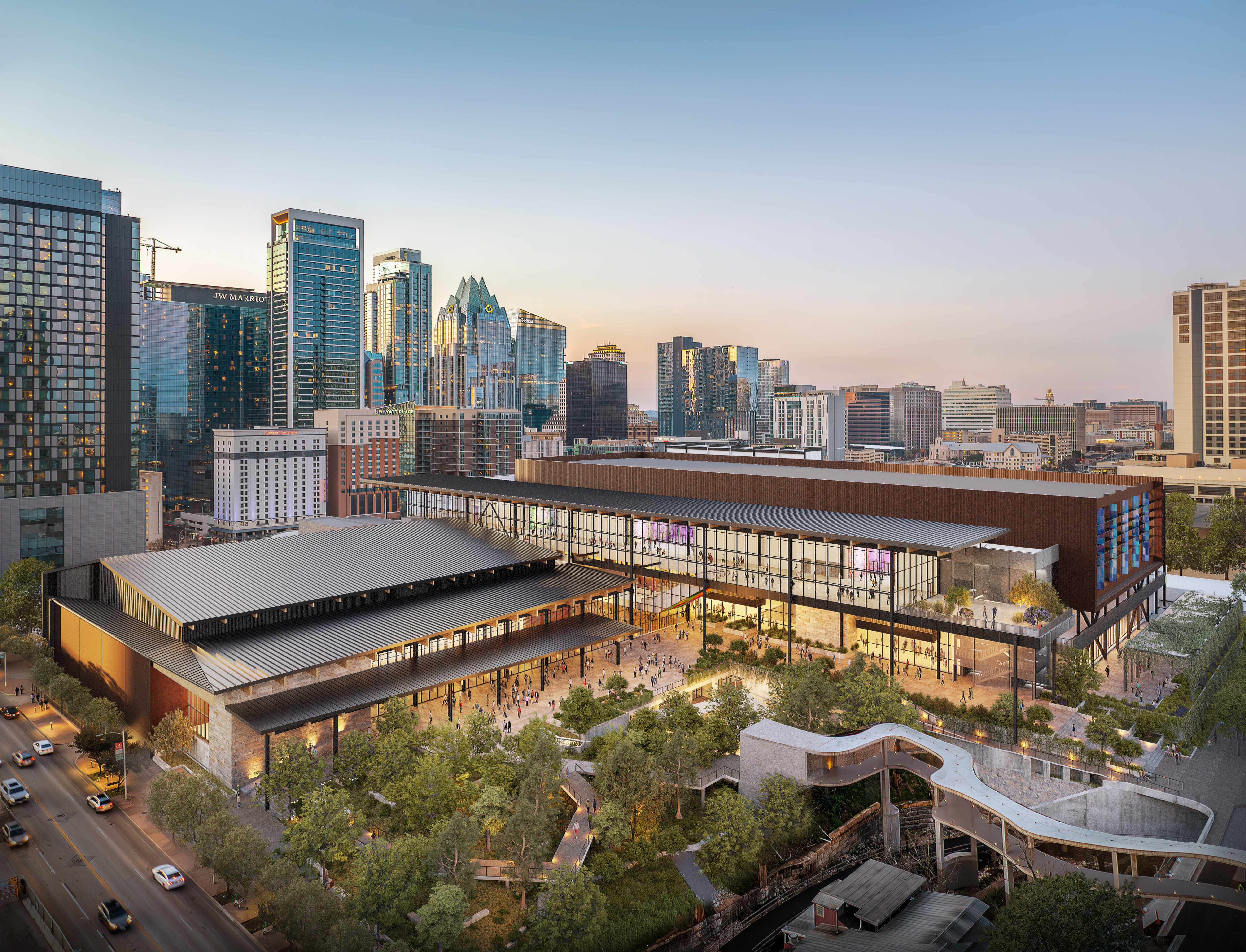
The Convention Center is being fully reimagined. The current building spans six blocks with blank concrete walls on nearly every side, breaking walkability and deadening the surrounding streets. The redesign will double rentable space while making the footprint more efficient and community-facing.
Timeline: Construction began post-SXSW 2025, with an estimated opening in 2029.
Key design changes:
- Reopens key street connections including Neches Street and parts of 2nd and 3rd Streets
- Transparent, publicly accessible ground floor with space for events, exhibitions, and community use
- Designed to host multiple events simultaneously, with both indoor and outdoor event spaces
- Integration with pedestrian corridors connecting Rainey Street and Waterloo Greenway
Why it matters: The current convention center is the single biggest barrier to walkability in East Downtown. Eliminating that six-block wall and reintroducing street-level activity will connect Rainey, Waterloo Greenway, 2nd Street, and the planned light rail stop in a way that doesn't exist today. The ability to run multiple events at once, indoors and outdoors, also makes this a real amenity for downtown residents and locals, not just convention visitors. This is less about the convention business and more about what happens to the blocks around it.
Learn more about the Convention Center redevelopment
3. I-35 Expansion + Cap & Stitch Program
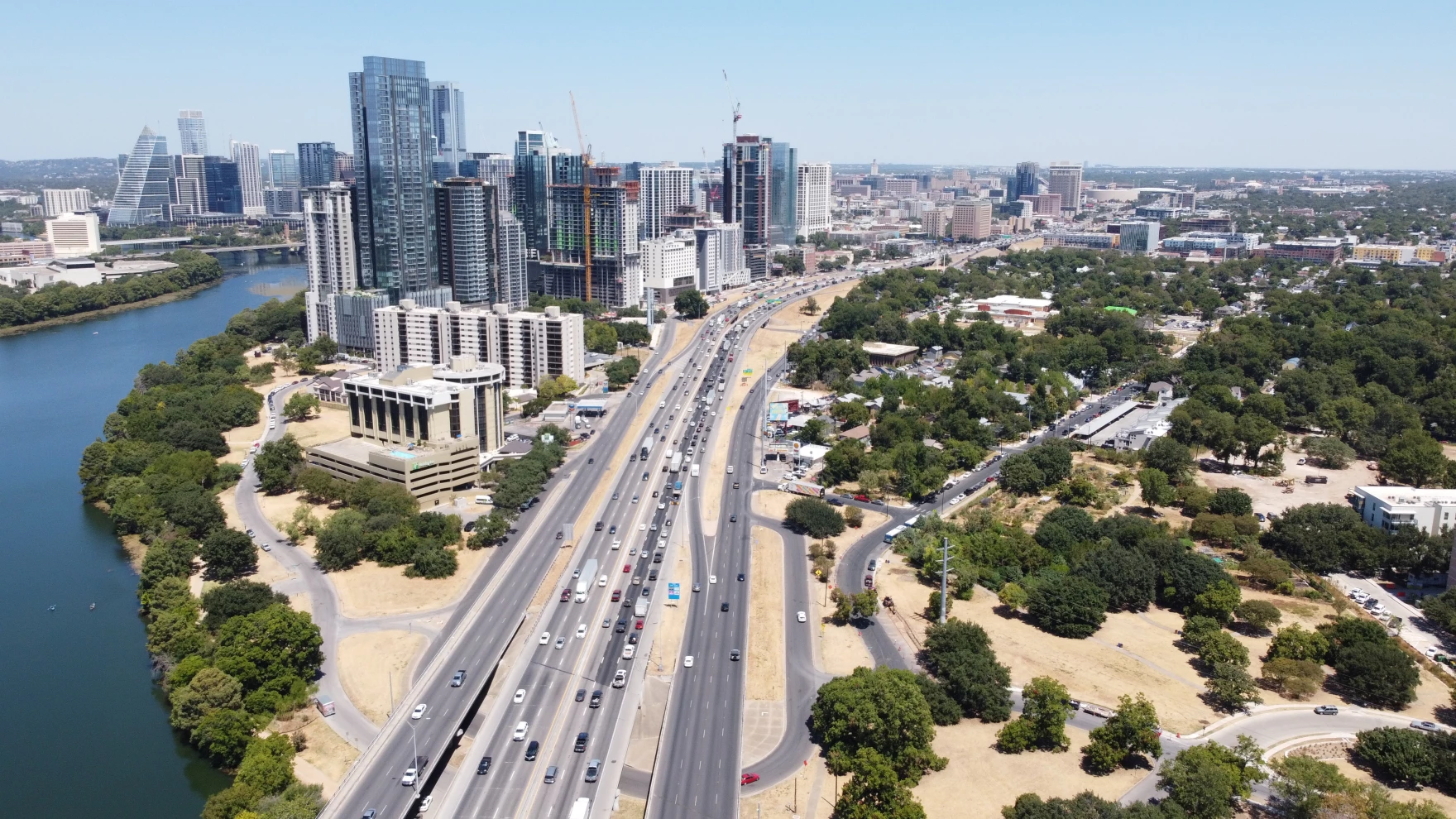
The single biggest infrastructure project in the area. TxDOT is lowering I-35 below grade through downtown, widening the corridor with managed express lanes, and laying the groundwork for a cap-and-stitch program: land bridges over the depressed freeway that could hold parks, trails, and community spaces.
Scope:
- Highway depressed below street level through downtown to reduce noise and visual disruption
- Managed express lanes added for regional traffic flow
- Cap and Stitch: parks and community spaces over the freeway — funding for the underlying highway infrastructure (the depression, retaining walls, and structural support to hold a cap) is approved and underway, while funding for the caps themselves is still being assembled by the City and partners
Why it matters: I-35 has been the physical and psychological barrier between East Austin and downtown since it was built. Lowering the highway and capping it with usable public space would properly connect east and downtown for the first time, turning what's been a dividing line into a seam. Combined with new light rail service feeding directly into downtown, the east-west barrier effectively dissolves. The short-term reality is construction disruption, but the long-term upside is generational.
Learn more about the I-35 project
4. Old 6th Street Revitalization ("Dirty 6th")
A public-private revitalization of the 6th Street corridor between Brazos and I-35, led by Stream Realty in coordination with the City of Austin. The plan pairs Stream's restoration of 31 historic facades and curated retail strategy with city-led streetscape, safety, and public-realm improvements, converting the entertainment-only zone into a mixed-use, multi-hour district.
The vision:
- An 18-hour destination with sidewalk cafes, grab-and-go eateries, and Austin-forward retail
- Retained nightlife with more approachable, daytime uses added
- Restoration of the architectural history of one of Austin's oldest commercial corridors
Why it matters: 6th Street's reputation has been a drag on the surrounding area for years. Higher-quality foot traffic, lower vacancy rates, and restored historic character would lift property values in every direction. Think of what happened when 2nd Street went from a dead zone to one of downtown's most desirable corridors. With light rail planned a short walk away and the Waterloo Greenway feeding pedestrians directly into the corridor, the daytime activation case gets meaningfully stronger.
Learn more about Old 6th Street
5. Rainey Street District Evolution
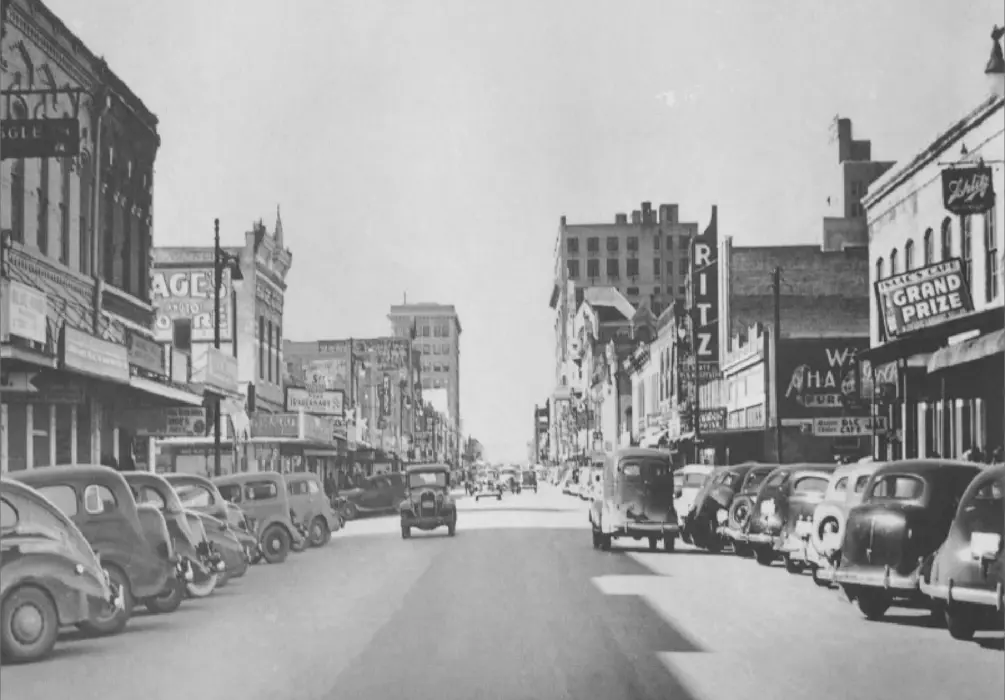
Rainey Street has gone through multiple reinventions. It started as a quiet residential street of early-1900s bungalows, was rezoned for commercial use in the early 2000s, and became one of Austin's most popular nightlife destinations during the temporary bungalow bar era post-2008. Now the next chapter is underway: dense residential development with curated retail and public realm improvements.
Several high-rise towers are under construction or recently completed. Ten or more original bungalow bars remain but are increasingly surrounded by 40-story development.
What's changing:
- Dense residential towers replacing the temporary bar infrastructure, adding a net positive of new restaurant and retail space at the ground level
- Wider sidewalks, shaded areas, and retail promenades between buildings
- A walkable waterfront neighborhood taking shape along Lady Bird Lake
Why it matters: Rainey is transitioning from nightlife-centric to residential-centric, and the new development is actually adding more restaurant and retail space than the bungalow bars ever offered. That shift brings better amenities, more consistent foot traffic, and proximity to the lake without the weekend-only energy. The Waterloo Greenway trail extension links Rainey directly into the broader park system, and the new light rail stop a short walk away adds rail access on top of an already lake-front, walkable district. For buyers and investors, this is a maturing subdistrict with long-term upside as the lifestyle balance improves.
6. Project Connect (Austin Light Rail)
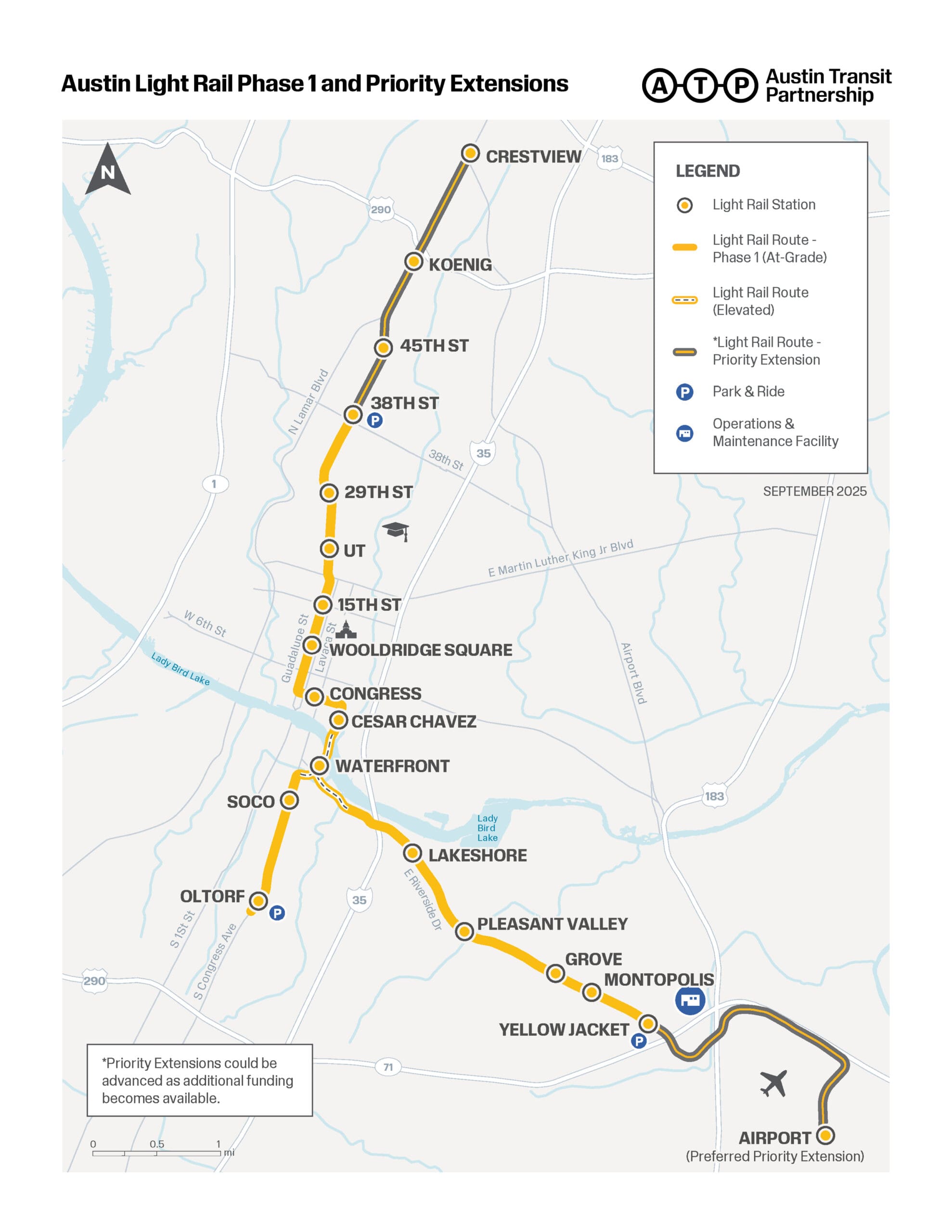
Austin's first modern light rail system will have a stop in the center of these East Downtown changes, near the rebuilt Convention Center. From there the line runs north through downtown and the Capitol corridor to UT, and south across a new dedicated rail-and-pedestrian bridge over Lady Bird Lake, splitting to serve South Congress and the East Riverside corridor toward the airport. The same Convention Center block is also the transfer to the existing MetroRail Red Line, extending the network east through East Austin and northwest to the Domain and Leander.
Where things stand:
- Federal environmental review cleared in early 2026 and design-build contracts are in place
- Construction targeted to begin in 2027, with service in the early 2030s
Why it matters: Light rail extends East Downtown's reach well beyond walking distance. With one transfer at the Convention Center block, the same neighborhood connects to UT, South Congress, East Riverside, the airport corridor, East Austin, the Domain, and Leander. Properties within a short walk of a station tend to see durable value premiums in every city that has built rail, and the heart of this transformation sits squarely inside that walkshed.
Learn more about Project Connect
How These Projects Connect
These six projects don't exist in isolation. The Waterloo Greenway is the connective tissue, physically linking the Convention Center, the I-35 cap, the 6th Street corridor, Rainey, and the new light rail stop into one continuous trail network. The I-35 project borders all of them to the east. The Convention Center redevelopment opens pedestrian routes between the others. Project Connect overlays the whole footprint with fixed-rail transit, so the parks, plazas, and reopened streets feed into stations rather than dead-ending at parking garages.
On the west side, the combination of the Central Library, Shoal Creek Trail, Seaholm Plaza, and 2nd Street District created a neighborhood that barely existed 15 years ago. The east side now has its own version of that same infrastructure investment, arguably at a larger scale, with rail transit on top.
For property values, the trajectory is clear. Buildings near these projects stand to benefit from the kind of neighborhood improvement that compounds over time, the same way west side properties did over the past decade.
What This Means for Buyers and Investors
If you're considering East Downtown, the timing is worth paying attention to. Construction disruption is real and creates buying opportunities in areas where the long-term direction is clear. These aren't speculative projects. They're funded, permitted, and in many cases already underway.
I track this area closely and work with buyers and investors looking at downtown Austin with a long-term lens. If you want to talk through what's happening in a specific building or neighborhood, reach out.